
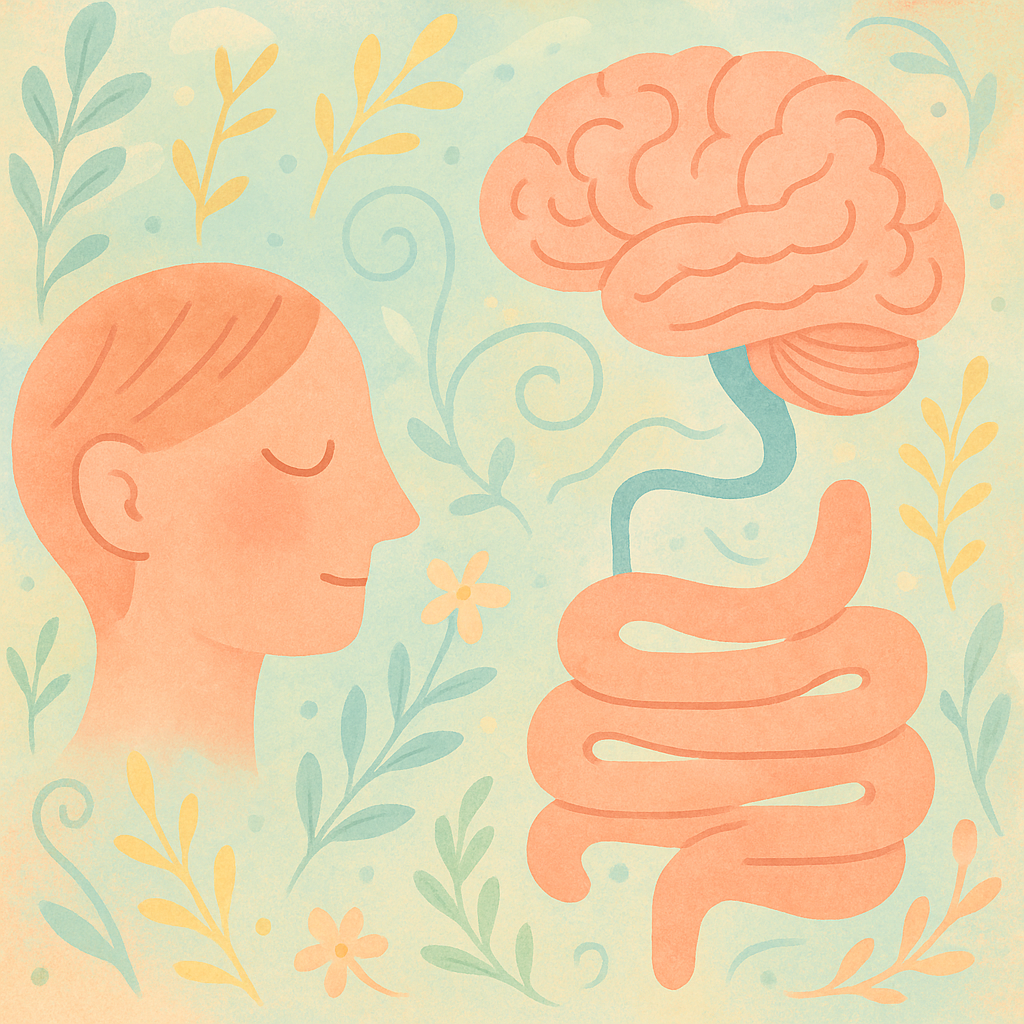
Your gut and your mental health are in constant conversation.
August tends to be a time where many people are travelling or on holiday, eating out of routine- grabbing food on the go, indulging in treats, or switching time zones. It’s fun, but it can leave digestion unsettled and mood strangely off. By understanding the gut–brain connection, you can take back a little control.
I recently read a review in Pharmacological Research on the microbiota-gut-brain axis and its role in mental health and neurological conditions (Socała et al., 2021). It’s 20+ pages of dense science, but here I’ll break it down into simple, actionable insights.
The science in plain English
- Your gut and brain are in constant conversation. This “gut-brain axis” is a two‑way communication line via the vagus nerve, hormones, immune molecules, and microbial metabolites. Your gut microbes can influence neurotransmitters such as serotonin, dopamine, and GABA. Even if most gut‑made chemicals don’t cross the blood-brain barrier, they can still affect mood indirectly. Your gut microbiome refers to the trillions of bacteria, fungi, and other microbes living in your digestive tract. These tiny organisms help digest food, make vitamins, regulate your immune system and as we’re now learning, even influence your mood and brain.
- Stress and routine changes affect your gut and your mood. Psychological stress and irregular eating can create a “leaky gut,” where the intestinal barrier loosens. Certain foods like ultra-processed snacks, excess sugar, artificial sweeteners, and alcohol can spike inflammation, disrupting the gut microbiome, and throwing off brain chemistry. This allows bacterial fragments to trigger inflammation, activating the brain’s stress system and raising cortisol- feeding anxiety, fatigue, or low mood. Animal studies show that conditioned mice have higher stress responses and more anxiety‑like behaviour, which improves when their gut is repopulated with healthy microbes.
- Your microbes can be mood allies or saboteurs. A diverse, balanced gut microbiome tends to support calmer mood and cognitive function. Some strains, often called psychobiotics, show promise for easing stress or low mood. They are thought to affect the central nervous system through neural, immune, and metabolic pathways. Clinical trials suggest these are most helpful for people with existing stress or depressive symptoms, less so for already‑well individuals.
Experiments for the week (not medical advice)
The 3–3–3 Meal Check‑in
Before three meals, take three slow breaths, notice three sensations in your gut, and check your mood before and after eating.
Feed the couriers
Aim for 30 plants per week—fruit, veg, herbs, nuts, seeds, and whole grains.
Add small amounts of fermented foods– yogurt, kefir, kimchi if tolerated.
- Support your vagus nerve. After meals, try 60 seconds of extended‑exhale breathing (inhale 4, hold 6 and exhale 8) or a gentle humming set to activate the gut-brain axis.
- Optional: a probiotic pulse. A multi‑strain probiotic (with Lactobacillus and Bifidobacterium) for 4-8 weeks can support mood in stressed individuals- always alongside fibre and routine care.
- Stress before supplements. Gut health thrives on sleep, regular movement, and calm rituals (walks, prayer, journaling). Focus on these things before anything else.
Your gut isn’t just digesting your food-it’s decoding your mood and setting up your emotional tone.
I hope you enjoyed this article. Share it with anyone you feel may benefit.
Until next time,
Safiya
Want to explore this one-to-one?
Book a 30-minute chemistry call to see whether coaching is right for you, or get new articles straight to your inbox.