The science behind the words we hear, and why they stay with us long after they’re spoken.
I was coaching an author who told me how his friends had spent years encouraging him to turn his life story into a book.
He would always brush it off, saying “No, I can’t write a book.”
And then one day, he did.
He wrote it.
He got it published.
In our session, I asked him,
“What made you wait so long to write it?”
He paused for a moment and said,
“My teacher in school told me I’d never be able to write a long piece of fiction.”
That sentence had followed him for decades.
And it got me thinking about the power of words.
The kind ones that expand us.
And the unkind ones that clip our wings before we’ve even tried to fly.
So today, I want to look at the science behind the words we hear and why they stay with us long after they’re spoken.
Words Create Pathways In The Brain
Every sentence we hear becomes an input to the brain.
The more emotionally charged it is, especially in childhood, the more deeply it imprints.
Through neuroplasticity, repeated messages strengthen specific neural pathways.
Over time:
“You’re not good at this” becomes a belief.
“You’re capable of more than you think” becomes a source of courage.
A single line from a teacher, parent, or friend can quietly shape the way we see ourselves for years.
Our identity is, in many ways, built on internalised sentences.
The Brain Responds To Words As Threat or Safety
One of the most fascinating findings in social neuroscience is that social pain activates the same brain regions as physical pain.
The dorsal anterior cingulate cortex, the region involved in the pain of a paper cut, also lights up when we feel rejected, belittled, or shamed.
This is why an unkind comment doesn’t just feel “hurtful.”
It is registered by the brain as harm.
On the other hand, kind, encouraging, and emotionally warm words activate our parasympathetic nervous system- signalling safety, lowering cortisol, and allowing us to think more clearly and creatively.
Tone, pacing, and facial expression matter too.
Our nervous systems are constantly asking, “Am I safe?”
And language is one of the quickest cues we have.
Words Change How We Regulate Emotions
Research on affect labelling (putting emotions into words) shows that simply naming a feeling reduces amygdala activity (our internal alarm system) and increases prefrontal involvement (logical thinking).
This is why people remember sentences like:
“It’s okay to feel this way.”
“I’m here with you.”
“You can take your time.”
So many of us carry private narratives like:
“I’m not creative.”
“I’m terrible at maths.”
“I’m not leadership material.”
“I always mess things up.”
Most of these didn’t come from us.
They were handed to us through someone else’s frustration, carelessness, bias, or bad day.
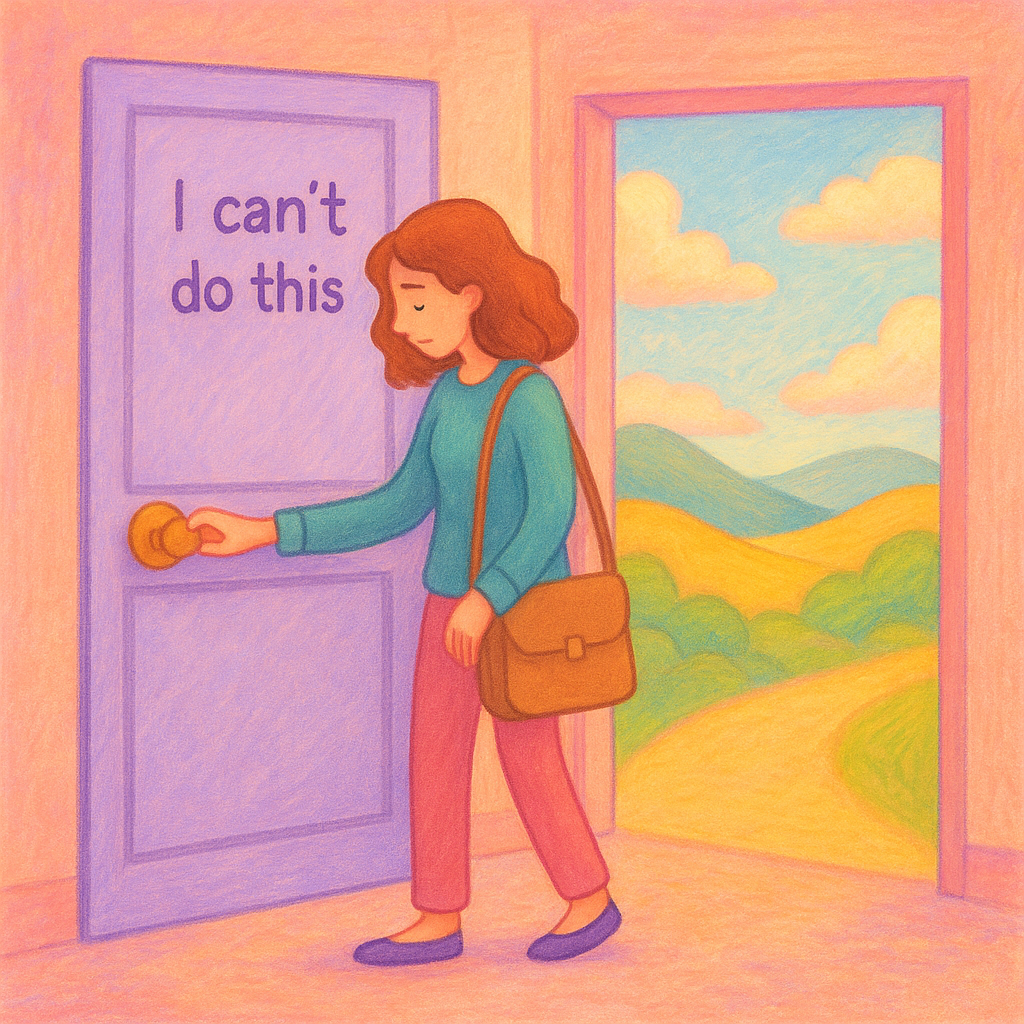
When the author I coached finally wrote his book, he didn’t suddenly acquire talent; he removed a sentence that had been sitting in the doorway of his potential.
Narratives can be rewritten.
And one powerful sentence offered at the right moment can become the beginning of a new neural pathway, a new belief.
Three Ways to Use Words as Brain-Shaping Tools
- Speak to yourself the way you’d speak to someone you love. Your brain listens.
Self-talk is still talk. - Use expansive language. Shift from: “I can’t do this” → “I’m learning this.” “This is too hard” → “This is stretching me.” Small language changes create big cognitive shifts.
- Give someone a sentence today. Something specific, sincere, and generous: “I love the way your mind works.” “You make people feel safe.” “You’re growing in ways you can’t see yet.” One sentence can follow someone for years.
Choose one worth carrying.
Coaching Reflection
If harmful words can echo across decades, imagine the impact of intentional, thoughtful, compassionate ones.
Maybe the most powerful thing we offer each other and ourselves isn’t time, or advice, or solutions.
Maybe it’s just one sentence.
I hope you enjoyed this article. Share it with anyone you feel may benefit.
Until next time,
Safiya
Want to explore this one-to-one?
Book a 30-minute chemistry call to see whether coaching is right for you, or get new articles straight to your inbox.