Why unlearning is as important as learning.
I grew up in a family that valued education and learning as a lifelong skill. My grandfather moved to the US and re-trained as a doctor, learnt how to live in a new country, a new language and continued that journey throughout his life.
I always thought lifelong learning was about accumulating knowledge- more books, more degrees, more expertise. But somewhere between research papers and late-night reflections, I realised that growth isn’t always about adding more.
Often, it’s about letting go, of old habits, stories, and ways of thinking that no longer serve us.
And neuroscience proves this. Let’s take a closer look.
The Brain that Never Stops Growing
For decades, scientists believed that our brains stopped developing after childhood, that neurogenesis and change had a cut-off date.
We now know that’s not true.
Our brains are like plastic, capable of rewiring and reorganising themselves throughout life. Every time we learn something new- a skill, a language, or even a new perspective- our neurons fire together, strengthening their connections.
But what we don’t talk about enough is the other half of learning called synaptic pruning.
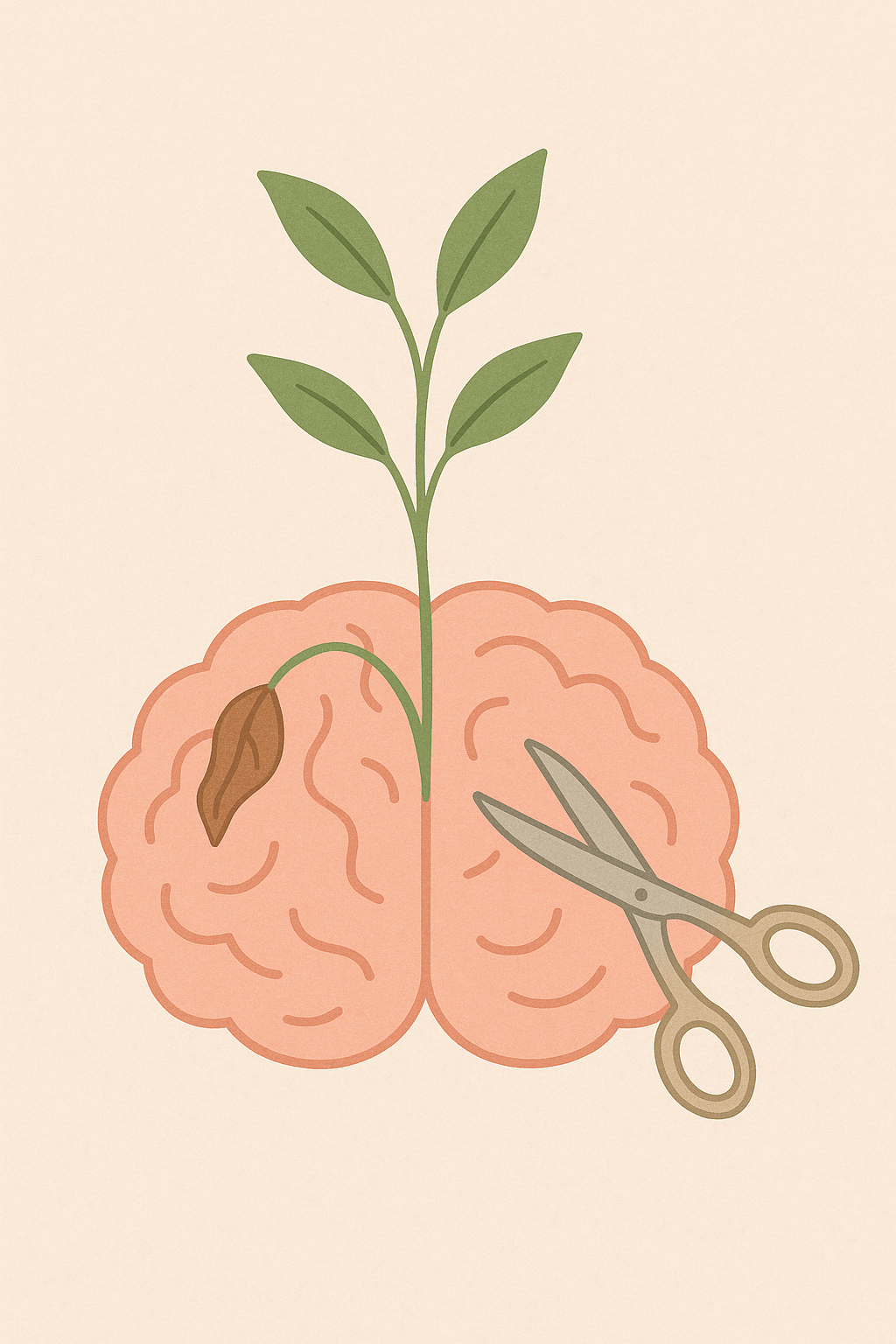
Just as gardeners prune a plant to help it grow stronger, the brain prunes unused neural pathways to make room for new ones.
Therefore, unlearning is built into our biology.
This process keeps our brains efficient, adaptive, and capable of evolving with us. Without pruning, the brain becomes cluttered- holding onto beliefs, fears, and habits that once helped us survive but now keep us stuck.
The Courage to Unlearn
In coaching, I often meet people who want to add more to their lives- more confidence, more focus, more clarity.
But before new growth can take root, something old often needs to be ‘pruned’.
Unlearning might mean:
- Letting go of perfectionism that once earned approval but now fuels burnout
- Replacing the need to be in control with comfort in uncertainty
- Softening self-criticism so that curiosity can take its place
Neuroscience shows that when we challenge old patterns, the prefrontal cortex (responsible for conscious decision-making) helps override automatic responses stored in the amygdala.
Over time, these repeated shifts weaken old neural pathways and strengthen new ones- literally rewiring the brain for change.
Something to Try
Think of one belief or habit that may have served you once, but doesn’t anymore.
Write it down. Then finish these two sentences:
“Once, I needed this belief because…”
“Now, I no longer need it because…”
Example: People-pleasing
Once, I needed this belief because…
…making everyone happy felt like the way to belong and be valued.
Now, I no longer need it because…
…I’ve learnt that real connection comes from authenticity, not approval.
This exercise brings awareness to how our brains adapt- it signals safety to let go, allowing new wiring to take hold.
Unlearning doesn’t erase what we’ve learned; it integrates the lessons and makes space for growth.
Your brain is always on your side. Constantly learning, rewiring, and pruning so you can evolve.
Sometimes growth feels like accumulation, and sometimes it feels like release.
Both are acts of learning.
If this made you pause or rethink what learning means, share it with someone who might need that reminder too.
I hope you enjoyed this article. Share it with anyone you feel may benefit.
Until next time,
Safiya
Want to explore this one-to-one?
Book a 30-minute chemistry call to see whether coaching is right for you, or get new articles straight to your inbox.