Why does your brain need human connection?
I’ve been feeling pulled in different directions lately. Not in the hustle culture- “too many projects” way – but in a deeper sense of being stretched across different types of connection.
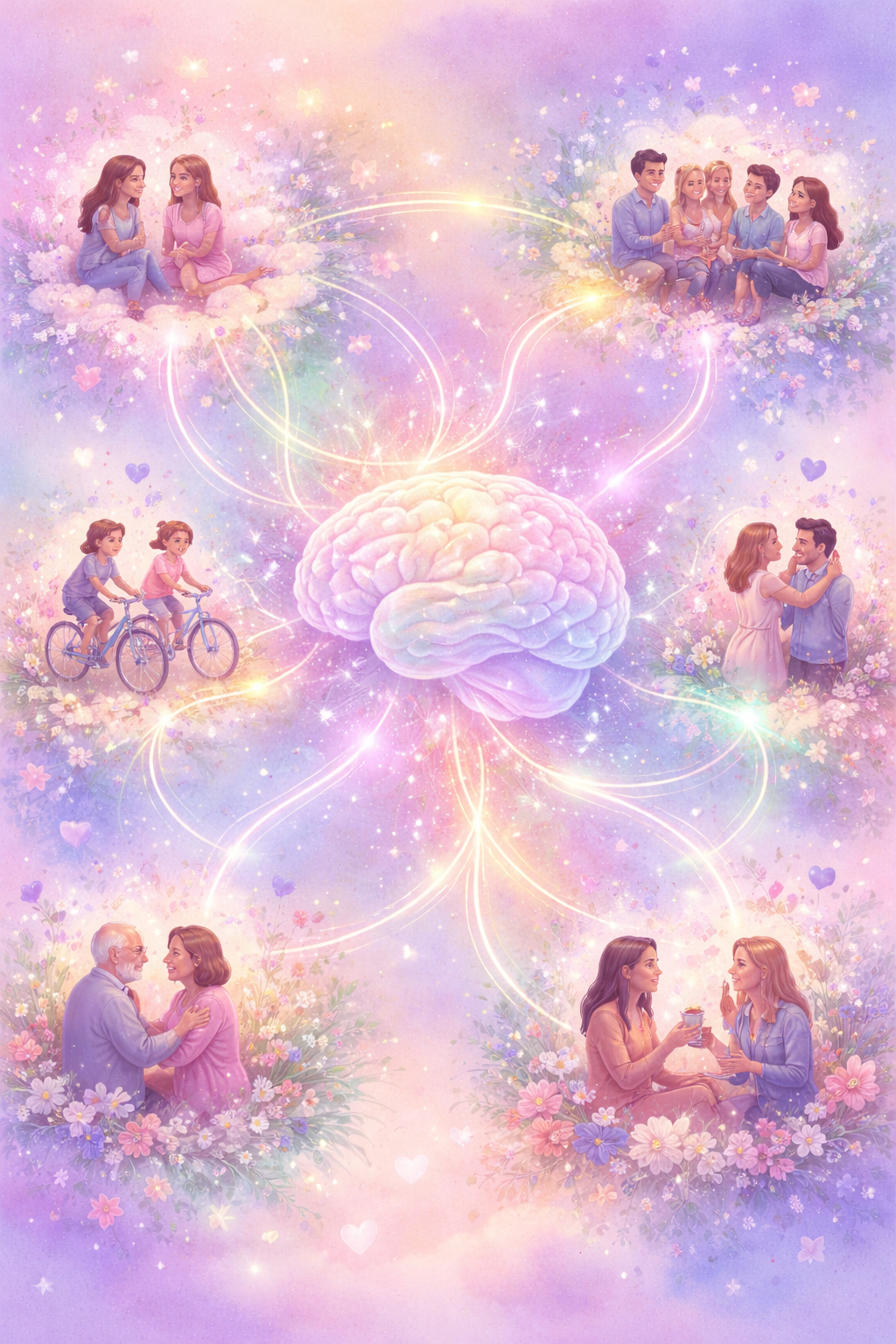
There are the people connected through my heart – the ones who feel like home no matter how much time passes.
The people I’m connected to through childhood – shared history that shaped who I became.
The people I actively choose to stay connected to, despite distance or busy lives.
And then there are the people in my daily life – the proximity connections that fill my days but may not fill my cup in the same way.
As I’ve sat with this feeling, I’ve realised my brain has been trying to tell me something important: not all connection is equal, and our brains know the difference.
So I decided to explore the science of connection..
Your Brain is Wired for Connection
Human brains thrive in social groups, saying that- animal brains do as well. The “social brain hypothesis” suggests that our large, complex brains developed specifically to navigate the intricate web of human relationships. And the evidence for this is written throughout our neural architecture.
When we experience social connection, our brains release oxytocin – often called the “bonding hormone” – which reduces stress and creates feelings of trust and safety.
Our mirror neuron systems allow us to simulate what others are feeling, creating the foundation for empathy.
And perhaps what is most telling, when we experience social rejection or isolation, our brains process it in the same regions that process physical pain – the anterior cingulate cortex lights up as if we’ve been physically hurt.
Your brain doesn’t just prefer connection – it needs it to function optimally.
But here’s where it gets interesting: not all connection activates these systems equally. The depth of connection matters.
Research distinguishes between “thick” relationships – characterised by embodied interaction, emotional intimacy, and shared experiences over time – and “thin” relationships that lack this depth. Your brain responds differently to each.
When you have a meaningful conversation with someone who knows you deeply, multiple neural systems activate: the reward circuits that make you feel good, the emotion regulation systems that help you process difficult feelings, and the memory consolidation systems that integrate these experiences into your sense of self.
Proximity connections, childhood connections, heart connections – they each activate different aspects of your social brain. But they share something crucial: they involve real presence, reciprocity, and the full bandwidth of human communication – tone of voice, facial expressions, physical presence, shared silence.
The Social Media Paradox
This is where social media enters the picture, promising connection but often delivering something quite different.
Social media platforms are extraordinarily good at hijacking our connection circuitry. Every like, comment, and share triggers a small hit of dopamine – the same neurotransmitter involved in reward and motivation. Your brain gets a signal that says “social engagement!” and it feels good in the moment.
But here’s the paradox: while these interactions activate our reward systems, they often fail to activate the deeper bonding and emotion regulation systems that thick relationships engage. It’s like your brain is getting social candy – quick sugar hits without the nutritional value of a full meal.
Research on social media use reveals this tension clearly.
- Passive scrolling – the mindless consumption of others’ content – is consistently associated with increased loneliness and decreased wellbeing.
- Active engagement – meaningful comments, direct messages, genuine interaction – shows more mixed results. And crucially, the quality of online interaction matters far more than the quantity.
The problem isn’t that digital connection is inherently bad. It’s that it can create an illusion of connection that satisfies us just enough to stop seeking the deeper connection our brains actually need. We feel “in touch” with dozens or hundreds of people, yet still feel lonely.
But does seeing their posts activate the same neural systems as actually being with them? The neuroscience suggests no.
What Your Brain Actually Needs
So what does this mean practically? How do we navigate a world where we’re digitally connected to more people than ever, yet often feel more isolated?
Start with awareness. This week, I invite you to notice the difference between a thin and thick connection in your own life.
Connection Audit
Pay attention to how different interactions leave you feeling. After scrolling social media, do you feel energised or depleted? Fulfilled or empty? After a meaningful conversation with someone who knows you, how does your nervous system respond? Notice the difference between proximity that creates genuine connection versus proximity that leaves you feeling alone in a crowd.
Ask yourself: Which of my connections are truly nourishing my social brain? Am I confusing the dopamine hit of digital engagement with the deeper bonding that comes from thick relationships?
Then, be Intentional:
Your brain needs thick connection – the kind that involves presence, reciprocity, vulnerability, and time. This doesn’t mean you need to abandon social media or cut ties with proximity connections. It means being honest about what each type of connection provides and ensuring you’re getting what your brain actually needs.
One meaningful conversation may matter more than a hundred digital exchanges.
A Final Thought
The feeling of being pulled in different directions across different types of connection? That’s not confusion, that’s information.
Your brain knows what it needs. The question is whether or not you’ll listen.
I hope you enjoyed this article. Share it with anyone you feel may benefit.
Until next time,
Safiya
Want to explore this one-to-one?
Book a 30-minute chemistry call to see whether coaching is right for you, or get new articles straight to your inbox.