Why the same words can hit differently depending on your state of mind.
Have you ever noticed how the same sentence, spoken in the same tone, can land completely differently depending on your state of mind?
One day it feels harmless.
Another day it feels threatening.
And it’s almost always with the people closest to us- a sibling, partner, or close friend.
The words are the same but your state of mind is different.
Let’s explore the science.
The Science: What Stress Does to Your Brain
Research in neuroscience shows that stress doesn’t just feel different- it alters brain function and structure.
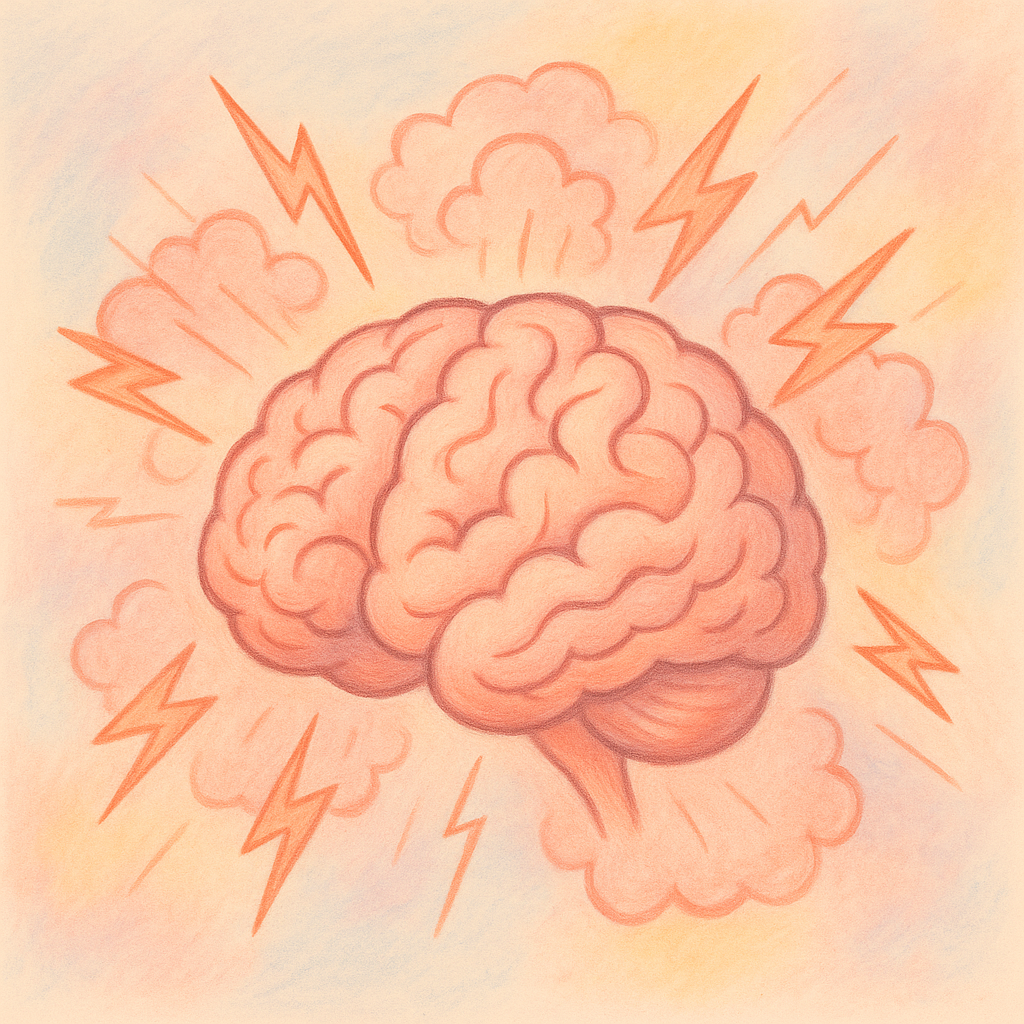
When you’re stressed, the amygdala (the brain’s threat detector) becomes more sensitive and reactive, scanning for danger even in neutral social cues.
At the same time, stress can reduce activity in the prefrontal cortex, the part of the brain involved in reasoning, context, emotion regulation, and thoughtful response.
These changes help explain why under stress we are more likely to interpret neutral comments as threatening and react impulsively rather than reflectively.
This is why a neutral comment suddenly feels loaded or critical.
Your brain is primed to protect, not interpret.
How to Shift back to Calm
What’s important to know is that this stress-based brain state isn’t fixed.
Research shows that practices which reduce stress can actively change how the brain functions, even over a relatively short period of time.
A large systematic review published in Brain and Cognition found that an 8-week Mindfulness-Based Stress Reduction (MBSR) programme produced brain changes similar to those seen in long-term meditation practitioners.
These changes included:
- reduced reactivity in the amygdala
- increased activity and connectivity in brain regions involved in emotional regulation, awareness, and executive control (including the prefrontal cortex and cingulate cortex)
Simply, mindfulness didn’t just help people feel calmer, it helped shift the brain away from threat-based processing and back toward regulation and clarity.
This matters because when the prefrontal cortex is active, your interpretation of the world changes.
You regain perspective.
The same words, spoken in the same tone, are now processed by a very different brain.
Why This Matters
Most conflict doesn’t start because someone chose the wrong words.
It starts because one or both nervous systems are already under strain.
When your brain is in a stress state, you’re not just hearing what’s being said, you’re interpreting it through a lens of threat. Your body is prepared to defend or withdraw long before your rational brain has a chance to step in.
This is why arguments often escalate so quickly with the people we love most.
Not because the relationship is broken, but because stress temporarily shifts the brain away from connection and toward protection.
Understanding this changes how we approach conflict.
Instead of asking, “Why did they say it like that?”
You can pause and ask, “What state is my brain in right now?”
That single moment of awareness can create space between stimulus and response.
A Tool to Help You See Your Brain in Different States
Before you go, I want to share something exciting.
I recently tried a free tool called Nooscape, which visually represents your brain in different emotional and cognitive states. I was surprised by how powerful it felt to see my brain state visually represented.
I’m including the link for you at the end of this email.
I recommend trying it twice:
- once when you’re feeling stressed or anxious
- and again when you’re feeling calm or grounded
You’ll notice how dramatically the images change, a reminder that your brain state is not fixed, and with the right tools, you can shift it. You can also save the images for reference!
I hope you enjoy exploring it as much as I did, please share with anyone else you feel may benefit.
I hope you enjoyed this article. Share it with anyone you feel may benefit.
Until next time,
Safiya
Want to explore this one-to-one?
Book a 30-minute chemistry call to see whether coaching is right for you, or get new articles straight to your inbox.